
The Walking Dead: Season One
Skybound Game Studios, IncAdventure
4.264.24K Reviews
- Version
- 1.23
- Installs
- 10.00M
- Age Rating
- Mature 17+
Screenshots
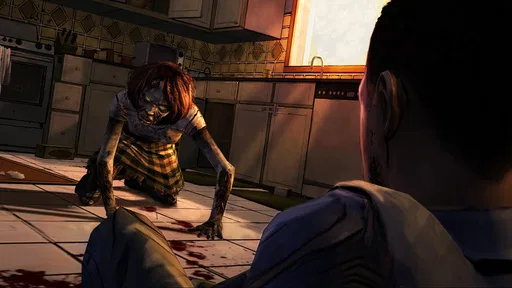
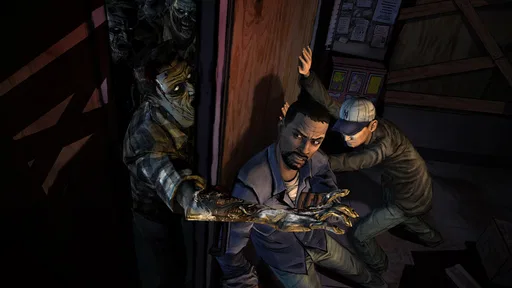
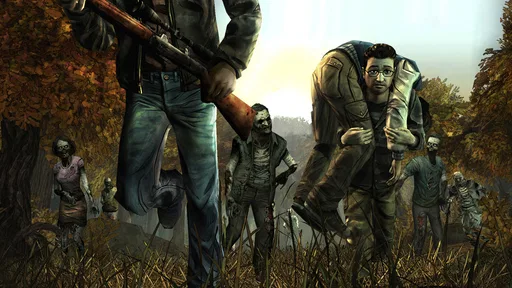
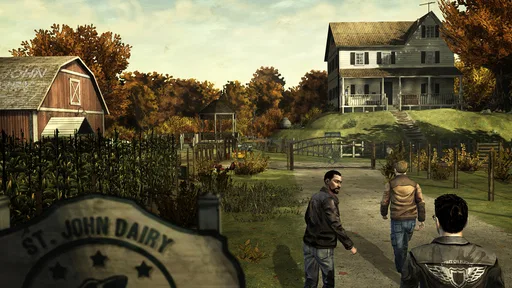
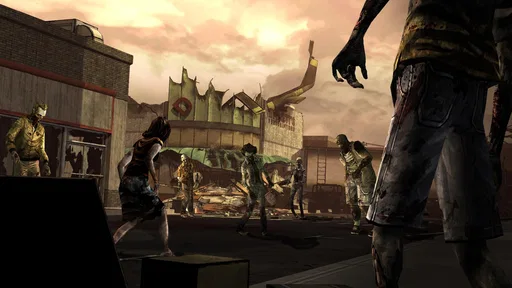
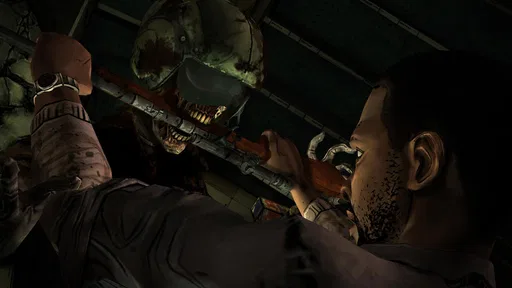
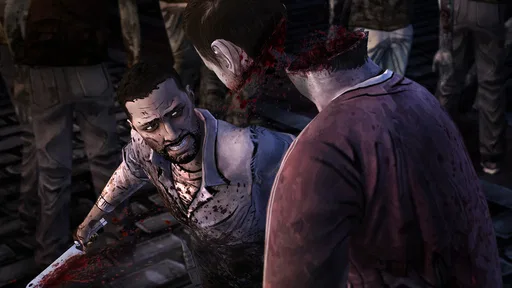
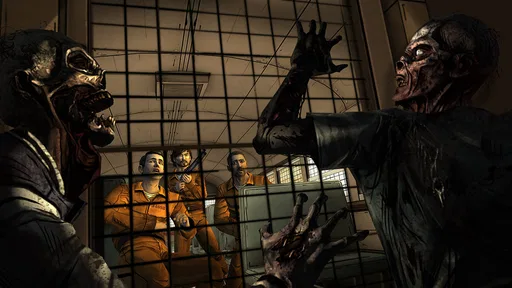
Our Review of The Walking Dead: Season One
 Analysis by Appyee
The Walking Dead: Season One is the kind of adventure game I recommend when someone wants a story that demands attention rather than a quick distraction. Its greatest strength is not simply the bleak setting or the presence of zombies; it is the pressure placed on ordinary decisions. I spent much of my time weighing what felt right, what seemed practical, and what might hurt someone later. That makes it memorable, but it also means this is not a comfortable game for every player.
Developed by Skybound Game Studios, Inc, this free game brings a mature, choice-driven adventure to Android and iOS. It has earned a 4.2 average from around 1.3 million ratings, with more than 10 million installs. Those numbers make sense to me: the game has a strong emotional hook, a recognizable world, and a style that still stands apart from routine action games. However, its appeal depends heavily on whether you enjoy slow-burn storytelling, tense conversations, and consequences that may not always feel fair.
A story-first adventure where decisions carry emotional weight
The game opens by putting me in the role of Lee Everett, a man whose past matters, but whose immediate problem is survival. Very quickly, the experience becomes less about clearing out enemies and more about forming relationships in a dangerous world. The central bond with Clementine gives the story its emotional focus, while the wider group creates constant disagreement about safety, trust, and responsibility.
That structure is what separates this from a conventional zombie game. I am not mainly searching for better weapons or trying to build the strongest character. I am listening, choosing how to respond, deciding whom to support, and trying to live with the results. The game repeatedly asks me to act before I have enough information, which creates tension without requiring complicated controls.
The presentation uses a stylized comic-book look rather than aiming for photorealism. I think that choice works particularly well on a phone because the visual identity is clear and expressive. Faces, gestures, and sudden changes in mood are easy to read, while the illustrated appearance helps the game retain its own personality. It also prevents the bleak setting from becoming visually monotonous.
My strongest impression came from the way small conversations can feel as important as major confrontations. A brief reply can change how another character sees Lee, and a decision made under a countdown can reveal more about the player than a carefully planned answer would. I found myself replaying moments not because I had missed a collectible, but because I wanted to understand how a different response might affect the group.
Why the choices work better than ordinary dialogue menus
Many story games advertise meaningful choices, but their decisions often feel like different lines leading to the same scene. Here, the pressure comes from limited time and incomplete knowledge. When a character asks for help, I may not know whether helping is wise, whether another person will resent it, or whether waiting creates a worse outcome. That uncertainty gives even simple exchanges a practical edge.
One useful way to approach the game is to decide what kind of person Lee is before starting. I found that choosing a consistent attitude made the experience more satisfying than trying to select the objectively “best” answer every time. A protective Lee, a cautious Lee, or a blunt Lee can all produce interesting scenes. Constantly chasing the safest result can make the story feel like a puzzle instead of a personal journey.
This is also why I would avoid reading detailed walkthroughs before playing. Knowing every consequence would remove much of the tension that makes the conversations effective. If a player is worried about making mistakes, I would suggest accepting that imperfect outcomes are part of the design. The game is more powerful when a decision feels like a decision, not like a test with one correct solution.
Exploration, action, and the rhythm between them
The adventure alternates between conversations, exploration, quick interactions, and moments of danger. None of these systems is especially difficult, which lets the narrative remain the main attraction. I could pick up the game after a break without needing to remember a complicated control scheme or a large inventory.
That simplicity is helpful on a touchscreen. Tapping objects and characters feels natural, and the game does not bury the player under menus. During tense sequences, the controls become more urgent, but the challenge generally comes from reacting while under pressure rather than mastering advanced movement. I appreciated that the game does not pretend to be a full action title; it knows that its real battles happen in conversations and moral choices.
Still, players who expect constant combat may find the pacing restrained. The world contains danger, but the game is not built around extended fights or open-ended wandering. I sometimes wanted more freedom to investigate locations, yet I also understood that a tightly directed structure allows the story to control its timing. This is closer to an interactive drama with survival elements than to a traditional mobile action adventure.
A practical tip is to play with headphones when possible and in sessions long enough to stay emotionally engaged. The game depends on tone, pauses, and reactions, so playing while distracted can weaken scenes that deserve attention. It works during a commute if the environment is quiet and the session is uninterrupted, but it is less suitable for five-minute bursts between notifications.
The meaningful weakness: a fixed story can limit replay value
My main reservation is that the sense of choice is stronger than the sense of freedom. Decisions change relationships, dialogue, and the shape of certain moments, but the adventure remains a directed narrative. Players looking for a large map, character builds, crafting, or endless survival will not find that kind of flexibility here.
There is also a trade-off in the consequence system. Some outcomes are immediate and easy to understand, while others may not become clear until later. That uncertainty is dramatically effective, but it can also feel frustrating when I believed I was making a reasonable choice and received a harsh result. The game asks me to accept emotional consequences without always giving me enough information to judge the situation fairly.
Replay value depends on how much I enjoy comparing alternate scenes. A second playthrough can reveal different conversations and relationships, but it will not transform the game into a new genre. Once I know the broad direction of the story, some suspense naturally disappears. I would replay it to explore a different version of Lee, not because it offers an endless stream of new activities.
The mobile format brings another consideration. The game is free to download, with in-app purchases ranging from $4.99 to $14.99 per item. Anyone considering it should check the purchase flow before handing the phone to a younger player, especially because the content rating is Mature 17+. The age rating is not a minor detail here: the story includes intense violence, frightening situations, harsh language, and emotionally heavy themes.
The current version is 1.23, and the minimum operating system listed is Android 4.4. That makes it accessible to a wide range of older Android devices in principle, but compatibility on an older phone is not the only question. Screen size, touch responsiveness, and available storage can affect how comfortable a long, story-focused session feels. On a small display, subtitles and visual details deserve extra attention.
How it compares with other adventure games
Compared with a conventional mobile zombie game, this is far less focused on combat loops and progression systems. There is no need to return repeatedly just to improve equipment or chase a higher score. That makes it a better choice for someone who wants a complete narrative experience, but a weaker option for someone who enjoys short repeatable rounds.
Compared with open-world adventures, it offers less freedom but much tighter dramatic control. I cannot wander indefinitely or solve every problem in my own order. In exchange, scenes are paced like episodes of a serious television drama, with conversations building toward moments of crisis. If I want exploration above all else, another adventure game would suit me better. If I want a focused story in which relationships matter, this is the stronger pick.
It also differs from lighter comic-book games. The familiar franchise setting may attract players who expect spectacle, but the experience is more interested in fear, loyalty, grief, and difficult responsibility than in delivering constant heroic victories. I would not choose it for a cheerful family gaming session or for a player who dislikes bleak stories. Its emotional intensity is a feature, but it can become tiring if played without breaks.
Who will get the most from it
I think the best audience is anyone who enjoys narrative adventures where dialogue is as important as action. Fans of interactive dramas, character-centered television, and moral dilemmas should find plenty to appreciate. It is especially effective for players who like discussing choices afterward: who deserved help, whether a risky decision was justified, and how much responsibility one person can carry in a collapsing society.
A realistic everyday use case would be an evening when I have an hour free and want something more absorbing than a quick mobile game. I can complete a meaningful section without learning a complex system, but I still need to stay present because choices arrive at inconvenient moments. It is also suitable for playing with a friend nearby, provided that both people agree not to argue over every decision and accept that there may be no perfect answer.
I would suggest skipping it if your priority is competitive play, relaxed entertainment, or long-term character progression. It is also a poor match for anyone who dislikes timed responses, serious violence, or stories that deliberately create regret. Younger players should not be treated as the target audience simply because the game is available on a phone; the Mature 17+ rating reflects the tone and subject matter.
Another group that may want to look elsewhere is anyone with little patience for directed storytelling. The game expects me to follow its scenes rather than invent my own objectives. There are moments of interaction, but not the kind of sandbox freedom found in larger adventure titles. I would rather recommend a more open game to a player who wants to explore at their own pace, even if that means giving up some of this story’s carefully built emotional momentum.
Small habits that improve the experience
I found three habits particularly useful. First, I let scenes play out instead of tapping rapidly through every line. The pauses and reactions often communicate as much as the words, and rushing can make relationships feel flatter than they are. Second, I treated each decision as a reflection of Lee’s priorities rather than searching for a universal solution. That made setbacks feel like part of my version of the story.
Third, I kept the game separate from casual multitasking. A notification or conversation in the room can cause me to miss a timed response, and the result may stay with me for much longer than the distraction itself. Saving the game for a quiet period is not essential to understanding it, but it makes the emotional rhythm far more effective.
I also recommend resisting the urge to restart immediately after an unpleasant outcome. The temptation is understandable, especially when a choice seems to produce a painful result. Yet the narrative gains much of its identity from imperfect survival. Restarting every time things go badly turns a tense human story into a sequence of optimized selections.
My final view after living with the story
The Walking Dead: Season One remains a compelling adventure because it understands that survival is not only about escaping danger. It is about deciding whom to trust, what to protect, and what kind of person to be when every option carries a cost. The controlled structure, straightforward touch controls, and expressive presentation all serve that central idea rather than distracting from it.
Its limitations are real. The pace can be slow for action-focused players, the directed design leaves little room for free exploration, and replaying cannot restore the surprise of a first journey. Some consequences may also feel severe when the game withholds information. I would not call it a universal recommendation, especially for children or anyone seeking a light mobile pastime.
For me, though, the balance still works. The free entry point makes it easy to discover whether this style suits you, while the adventure’s strongest scenes offer more emotional substance than most phone games. Skybound Game Studios, Inc has built an experience that is better approached as a complete dramatic journey than as a disposable app.
My recommendation is clear: choose it if you want a mature, story-led adventure and are willing to accept uncomfortable choices without chasing perfect outcomes. Skip it if you need constant action, open-world freedom, or a cheerful way to pass a few minutes. For the right player, this is not merely a zombie game on a touchscreen; it is a tense character story that asks what survival should look like when every decision affects someone else.
Verdict
Strengths of The Walking Dead: Season One
- Strong character development and emotional storytelling.
- Choices create tension and make conversations feel meaningful.
- Distinct comic-book art style suits the Walking Dead universe.
- Episodes offer varied pacing, from quiet scenes to intense danger.
- Works well with touch controls on both phones and tablets.
Limitations of The Walking Dead: Season One
- Some decisions have limited impact on the overall ending.
- Older visuals and animations may feel dated on newer devices.
- Loading times can interrupt the otherwise cinematic experience.
- The complete story requires purchasing additional episodes.
- Replay value is reduced once major story outcomes are known.
Similar Picks in This Category
View All
Roblox
Roblox Corporation4.2

Pokémon GO
Niantic, Inc.3.5

Ninja warrior: legend of adven
TOH Games4.6

Ninja Arashi
Black Panther4.6

Eyes - The Horror Game
Fearless Games sp. j.4.5

Critical Action:Gun Strike Ops
FPS Shooter & Action Game4.3
Frequently Asked Questions
What is The Walking Dead: Season One about?
The Walking Dead: Season One is a story-driven adventure game based on the comic book universe, following Lee Everett and a young girl named Clementine during the early days of the zombie outbreak. Instead of focusing mainly on combat, the game emphasizes dialogue, exploration, difficult decisions, and emotional relationships. Your choices influence conversations, character reactions, and several events throughout the season.
Is The Walking Dead: Season One suitable for children?
The game is generally intended for mature audiences because it contains graphic violence, frightening zombie encounters, strong language, death, and emotionally intense themes. Some scenes can be disturbing, particularly those involving vulnerable characters and moral dilemmas. Parents should check the age rating available in their region before downloading it, especially if the device will be used by younger players.
Does the game require an internet connection to play?
After installation, The Walking Dead: Season One can generally be played offline, which is convenient for travel or areas with limited connectivity. An internet connection may still be needed to download the game, install additional episode data, receive updates, or restore purchases through the relevant app store. Available features and episode delivery can vary depending on the mobile version.
How do choices affect the gameplay and story?
Choices are one of the main features of The Walking Dead: Season One. During conversations and timed situations, you decide how Lee responds, who he supports, and how he handles dangerous problems. These decisions can change relationships, dialogue, and certain scenes, although the overall story follows a structured narrative. The consequences make replaying the season worthwhile.
What should I check before downloading the mobile version?
Before downloading, check that your Android or iOS device meets the publisher’s requirements and has enough free storage for the base game and any included episodes. Performance may differ between older and newer phones or tablets, and the game contains mature content. Also confirm whether the download includes the complete season or requires separate episode purchases within the application.
Play our best games!


